Describe the Motion of the Planets Across the Sky
However occasionally the planet will seem to reverse direction and for a short time appears to move from east to west. Classical constellations of the zodiac.

The Apparent Motion Of Stars Planets Video Lesson Transcript Study Com
The answer is yes.
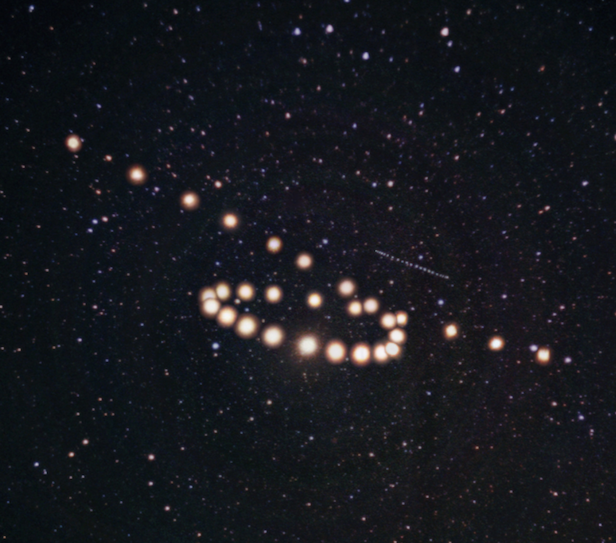
. The elliptical orbit of planets was also the basis of. The planets appear to move across the sky because of physical processes involved in motion which includes the rotation of the Earth and the momentum that causes them to revolve in their orbits. The rotation of the Earth on its axis causes all objects to appear to move around the sky once each day.
Three of the superior. The superior planets go completely across our night sky so they dont need to bounce back and forth to complete an orbit. The planets Venus Mars Jupiter and Saturn can all be seen with the naked eye.
The circle ellipse parabola and hyperbola are all formed by the intersection of a plane with a cone. From our point of view the Sun trundles along the ecliptic due of course to our orbital motion while Mercury and Venus run rings around the Sun. Relative to the stars however the planets generally move from west to east like the Sun and Moon.
Each night the superior planets move very slightly eastward west to east against the starfield and increase their RA as they orbit the Sun. The pattern of stars in the constellations dos not change from year to year. The path of an object through space is called its orbit.
Their motion in the sky is quite separate. The Motion of the Planets in the Sky Objective. These planets are closer to the Sun than we are and they orbit the Sun faster than we do.
This is why such curves are called conic sections. For many years people believed that the Earth was the unmoving center of the universe and that the planetsSun moon and the stars moved on spheres around the Earth. For planets apparent motion in the sky comes from a combination of their intrinsic motion around the Sun and their reflex motion.
Keplers first law is very simple. Click to see full answer. They also orbit in.
You can think of an ellipse as a squashed circle and the amount it deviates from being a perfect circle is called its eccentricity e. The stars therefore complete a full circle 360 in 24 hours. Astronomers such as Copernicus and Galileo suggested that a Sun centered solar system offered a better way to understand the motions of these objects in the sky.
So at some times we see these planets. The bright object that lights up our daytime sky. The Sun Moon and planets traverse the same strip of the sky from east to west.
15 24 360. The name planets comes from the Greek word planetos which means wanderer. Each of the planets orbits the sun like we do and moves relative to us day by day and month by month.
The large round object in the night sky that is sometimes visible during the day. If there were no atmosphere so that we could see Polaris all the time would the Sun also be going in a circular path centered on Polaris. Remember stars dont change their RAs or declination so the.
They all appear to slowly rotate about a fixed point in the northern sky. It states that all planets move in elliptical orbits about the Sun with the Sun at one focus of the ellipse. In this laboratory the inferior planets and superior planets will be discussed.
Every day the Sun rises in the east moves through the southern part of the sky and sets in the west. If you observe a planet over any two consecutive nights it will seem to move from west to east against the background of the stars most of the time. The planets move slowly enough that their positions change only slightly from night to night.
The planets appear to move across the sky because of physical processes involved in motion which includes the rotation of the Earth and the momentum that causes them to revolve in their orbits. 5 in 20 minutes 75 in 30 minutes 15 in an hour. The Earths revolution relative to the sun the Earth takes the planet 36525 days to complete one revolution around the sun.
This is because unlike the stars whose position relative to each other is fixed the planets appears to wander. Over a full 24-hour day the angle of rotation would be. Stars rise in the east and set in the west.
Six of the planets also rotate about their axis in this same direction. Relative to the background of stars the axis of the planet wobbles precesses it takes 26000 years to complete. Motion of the Planets The planets are different.
All the planets orbit around the Sun in the same direction in nearly circular orbits. However much better information can be gathered with a telescope and better still by satellite and space probes. The rate of motion is steady so simple multiplication or division allows us to calculate the angle for any other time period.
The First Two Laws of Planetary Motion. Its easiest to understand the retrograde motion of the inner planets Mercury and Venus. In this scenario at aphelion the sun is traveling its slowest rather then visa versa.
All eight planets in the Solar System orbit the Sun in the direction of the Suns rotation which is counterclockwise when viewed from above the Suns north pole. They look that way because they are very far away. Something that happens the same way more than once.
They usually just move along in a smooth direct motion. They therefore rise in the east and set in the west as part of the skys diurnal motion. Most stars look like tiny dots of light in the night sky.
The exceptions the planets with retrograde rotation are Venus and Uranus.
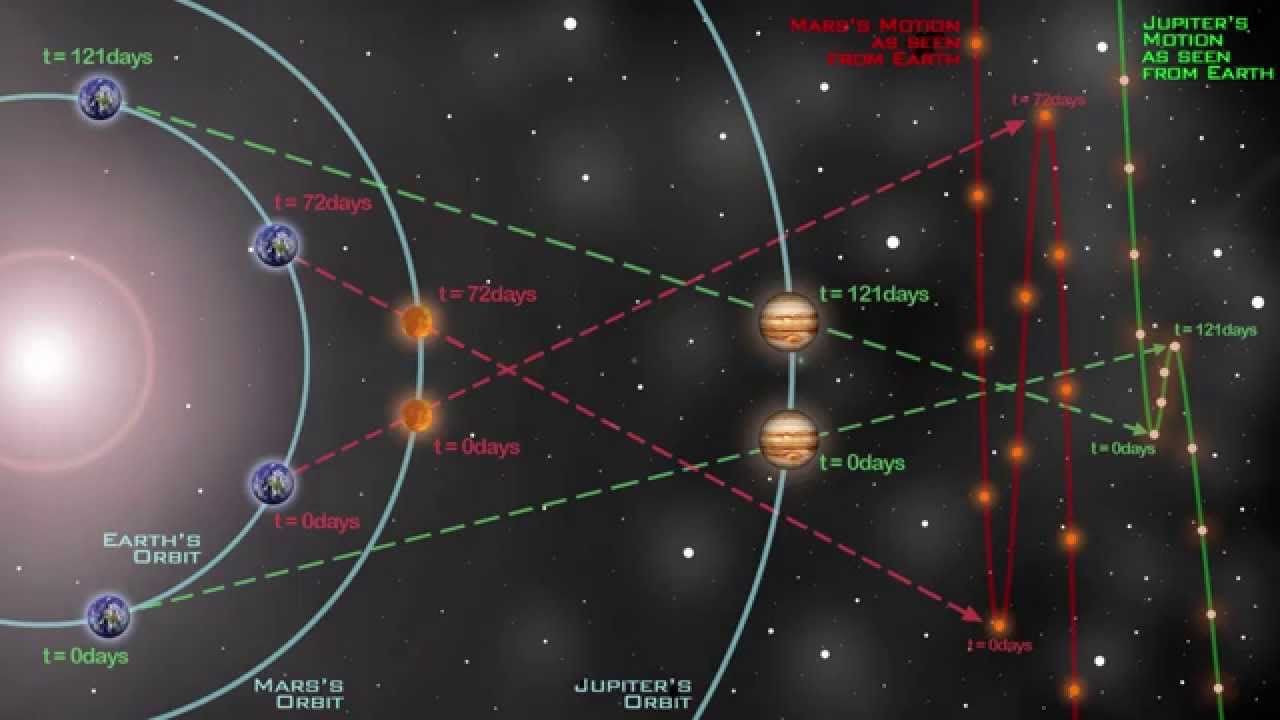
Retrograde Motion Youtube

What Is Retrograde Motion Astronomy Essentials Earthsky Retrograde Motion What Is Retrograde Retrograde
Why Do Some Planets Appear To Move Backwards Through The Sky
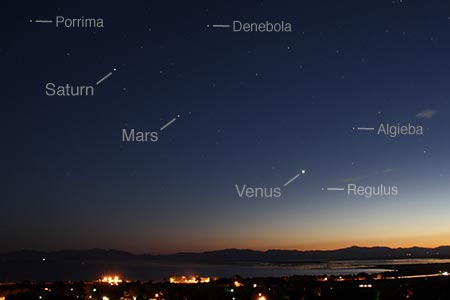
Understanding Astronomy The Planets


Comments
Post a Comment